
Choosing the right mild hyperbaric oxygen chamber manufacturer is an important decision for wellness centers, sports recovery facilities, luxury hotels, private clubs, spas, and other commercial wellness businesses.
An oxygen chamber is not simply a piece of equipment that can be selected based on appearance or price. For a long-term commercial project, buyers should consider product design, construction, pressure specifications, quality control, customization capabilities, production experience, documentation, and after-sales support.
With more suppliers entering the oxygen wellness equipment market, understanding how to evaluate a manufacturer can help buyers make a more informed purchasing decision.
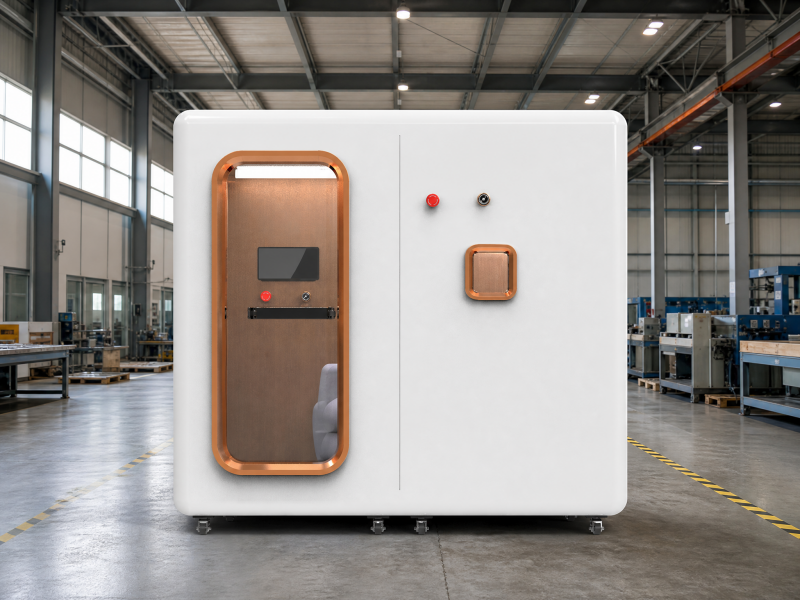
This guide outlines the key factors to consider when selecting a mild hyperbaric oxygen chamber manufacturer.
1. Manufacturer or Trading Company?
One of the first questions buyers should ask is whether they are working directly with a manufacturer or with a trading company.
A direct manufacturer typically has greater involvement in:
- Product design and development
- Material selection
- Production and assembly
- Quality control
- Product testing
- Customization
- Technical support
Working directly with a manufacturer can also make communication more efficient when a project requires customized dimensions, branding, interior configurations, or other product modifications.
However, the most important point is not simply whether a company calls itself a manufacturer. Buyers should look for evidence of actual manufacturing capabilities, production processes, technical resources, and quality-control procedures.
2. Evaluate the Product Design and Construction
The design and construction of an oxygen chamber are important factors for commercial applications.
When evaluating a product, buyers should consider:
- Chamber structure
- Material selection
- Door and sealing design
- Internal space
- Exterior dimensions
- Control system
- Interior configuration
- Lighting
- User accessibility
- Maintenance access
For commercial facilities, the chamber should also be considered in relation to the available installation space and the intended user experience.
A visually attractive chamber may be suitable for one environment, while another facility may require a different size, structure, or configuration.
This is why understanding the manufacturer’s ability to adapt the product to different applications can be important.
3. Understand the Pressure Specifications
Pressure specifications are another important part of the evaluation process.
Buyers should clearly distinguish between the chamber’s:
- Normal operating pressure
- Available operating pressure options
- Maximum physical pressure capability
- Pressure-control system
- Pressure-relief and safety components
These specifications should be supported by the manufacturer’s technical documentation and product design.
It is also important to understand that pressure capability is related to the overall chamber structure, materials, sealing system, hardware, and safety design. Increasing the pressure specification may require corresponding changes to the product structure and related components.
A reliable manufacturer should be able to clearly explain the pressure specifications of the proposed chamber rather than providing only a single headline number.
4. Look at Quality Control and Product Testing
Quality control should be considered throughout the manufacturing process, not only at the final inspection stage.
A professional oxygen chamber manufacturer may have quality-control procedures covering areas such as:
Incoming Materials
Materials and components should be checked according to the manufacturer’s internal quality requirements before entering production.
Assembly
The chamber should be assembled according to defined production procedures, with attention to structural components, sealing systems, electrical components, and control systems.
Pressure Testing
Pressure testing is an important part of evaluating chamber performance and identifying potential issues related to sealing and pressure retention.
Final Inspection
Before shipment, the completed product should undergo a final inspection to verify its condition and configuration.
When evaluating suppliers, buyers can ask:
- What testing procedures are performed?
- Is each unit tested before shipment?
- What quality-control documentation is available?
- Who performs the testing?
- Are testing records available for the project?
These questions can help buyers better understand how a supplier manages product quality.
5. Check Customization and OEM Capabilities
For many international buyers, a standard product is only the starting point.
Hotels, wellness centers, sports facilities, private clubs, and distributors may have different requirements for:
- Product dimensions
- Exterior appearance
- Interior design
- Branding
- Control interfaces
- Lighting
- Configuration
- Packaging
- Product specifications
Therefore, OEM and ODM capabilities can be an important factor when selecting a long-term supplier.
A capable manufacturer should be able to discuss customization requirements with the buyer and determine which changes are technically feasible.
For private-label projects, buyers should also clarify:
- Logo and branding options
- Product appearance
- Packaging
- Product documentation
- Minimum order requirements
- Production lead time
- Communication and approval process
6. Consider the Manufacturer’s Product Portfolio
A manufacturer with multiple chamber configurations may be able to provide more flexibility as a buyer’s business develops.
For example, a supplier may offer:
- Single-person chambers
- Two-person chambers
- Different chamber sizes
- Different exterior designs
- Different interior configurations
- Commercial and private-use configurations
- Customized OEM models
A broad product portfolio can also make it easier for distributors or multi-location businesses to develop different product offerings for different markets.
However, product variety should not be evaluated alone. Buyers should also examine whether the manufacturer can maintain consistent quality across its product range.
7. Evaluate the Manufacturer’s Application Knowledge
An oxygen chamber may be used in very different commercial environments.
For example:
Wellness Centers
A wellness center may prioritize user comfort, appearance, space efficiency, and ease of operation.
Sports Recovery Facilities
A sports-focused facility may place greater emphasis on durability, workflow, and integration into an existing recovery environment.
Luxury Hotels
Hotels and resorts may focus heavily on design, premium appearance, guest experience, and integration with the overall wellness concept.
Spas and Beauty Facilities
Spas may require a compact and visually attractive configuration that fits naturally into an existing treatment or relaxation environment.
Private Clubs
Private clubs may prioritize premium design, privacy, and a differentiated member experience.
A manufacturer that understands these different application environments can provide more useful product recommendations than a supplier focused only on specifications.
8. Ask About Installation and Space Requirements
Before purchasing a commercial oxygen chamber, buyers should evaluate the installation environment.
Important considerations may include:
- Available floor space
- Equipment dimensions
- Door and access clearance
- Electrical requirements
- Maintenance access
- User access
- Transportation route
- Installation location
For large commercial equipment, the chamber should be considered as part of the entire room layout rather than as an isolated product.
Buyers should provide the manufacturer with accurate information about the intended installation environment whenever possible.
This allows the manufacturer to evaluate whether the selected model and configuration are appropriate for the available space.
9. Review Documentation and Technical Communication
Clear technical communication is particularly important for international B2B projects.
Before placing an order, buyers should request relevant information such as:
- Product specifications
- Dimensions
- Configuration details
- Electrical requirements
- Pressure specifications
- User instructions
- Maintenance information
- Testing information
- Warranty terms
- Packaging information
For customized projects, it is also useful to confirm the final configuration in writing before production begins.
Clear documentation can reduce misunderstandings between the buyer and manufacturer, especially when projects involve multiple specifications or branding requirements.
10. Consider Production Lead Time and Supply Capability
For commercial projects, delivery timing can be just as important as product specifications.
Buyers should clarify:
- Production lead time
- Sample or prototype requirements
- OEM approval process
- Packaging time
- Shipping arrangements
- Spare parts availability
- After-sales support
If a project involves multiple units or repeated orders, buyers should also consider whether the manufacturer has sufficient production capability to support future demand.
A long-term supplier should be evaluated not only on the first order but also on its ability to support future expansion.
11. Evaluate Communication and After-Sales Support
A successful B2B relationship does not end when the product leaves the factory.
International buyers may need support with:
- Product operation
- Installation
- Maintenance
- Spare parts
- Technical questions
- Product documentation
- Future customization
Communication quality is therefore an important part of supplier evaluation.
During the initial discussions, buyers can observe how quickly and clearly the supplier responds to technical questions.
A manufacturer that provides detailed and consistent technical communication can make international cooperation more efficient.
12. Don’t Choose a Supplier Based on Price Alone
Price is naturally an important consideration, but it should not be the only factor.
Two oxygen chambers may appear similar while having differences in:
- Materials
- Structural design
- Components
- Control systems
- Testing procedures
- Customization capability
- Documentation
- After-sales support
For commercial projects, the total value of the equipment should be considered together with its intended application, expected usage, service requirements, and long-term supplier support.
A lower initial price does not necessarily represent lower total project cost, while a higher price does not automatically mean better quality.
The key is to compare suppliers based on clearly defined specifications and requirements.
13. A Practical Oxygen Chamber Supplier Checklist
Before selecting a manufacturer, buyers can use the following checklist:
Manufacturer
- Is the company a manufacturer or reseller?
- Does it have its own production capabilities?
- Does it have technical and engineering support?
Product
- What chamber configurations are available?
- What materials are used?
- What are the dimensions?
- What pressure specifications are available?
- What customization options are offered?
Quality
- What quality-control procedures are used?
- Is pressure testing performed?
- Is each unit inspected before shipment?
- What testing documentation is available?
OEM
- Can the product be customized?
- Is private labeling available?
- Can the exterior and interior design be customized?
- What are the MOQ and lead-time requirements?
Project
- What are the installation requirements?
- What documentation is provided?
- How is the equipment packaged?
- What after-sales support is available?
Using a checklist can help buyers compare different suppliers using the same criteria rather than making a decision based only on product appearance or initial quotation.
Choosing the Right Manufacturing Partner
Selecting a mild hyperbaric oxygen chamber manufacturer is ultimately about finding a supplier whose capabilities match the requirements of your project.
For a commercial wellness project, the ideal manufacturing partner should be able to provide more than a standard piece of equipment. Product design, manufacturing capability, testing, customization, technical communication, and long-term support can all play an important role in the success of an international B2B project.
At OxyMega, we focus on developing and manufacturing oxygen wellness equipment for international markets, with solutions designed for different commercial and private applications.
Our product portfolio includes single-person and multi-person oxygen chamber configurations, while our OEM and ODM capabilities allow products to be adapted to different project requirements.
Whether you are developing a wellness center, sports recovery facility, luxury hospitality project, private club, spa, or a new oxygen wellness brand, discussing your requirements with the manufacturer at an early stage can help determine the most suitable product configuration.
Frequently Asked Questions
What should I consider when choosing an oxygen chamber manufacturer?
Consider the manufacturer’s production capabilities, product design, pressure specifications, quality-control procedures, testing process, customization capabilities, documentation, lead time, and after-sales support.
What is the difference between an oxygen chamber manufacturer and a supplier?
A manufacturer is directly involved in designing and producing the equipment, while a supplier may source products from one or more manufacturers. Buyers should verify the actual production capabilities of the company they are working with.
Can oxygen chambers be customized for commercial projects?
Yes. Depending on the manufacturer’s capabilities and the product design, customization may include dimensions, exterior appearance, branding, interior configuration, control interfaces, lighting, and other specifications.
What pressure specifications should I ask about?
Buyers should ask about normal operating pressure, available pressure options, maximum physical pressure capability, pressure-control systems, and relevant safety components. The specifications should be confirmed with the manufacturer based on the specific model.
Is OEM available for oxygen chambers?
Many manufacturers offer OEM or ODM services. Buyers should confirm customization options, branding requirements, MOQ, production lead time, documentation, and approval procedures before starting an OEM project.
How can I compare different oxygen chamber suppliers?
Use a consistent checklist covering manufacturer capabilities, product specifications, construction, testing, customization, documentation, delivery, and after-sales support. This allows different suppliers to be compared using the same criteria.
Talk to OxyMega
Looking for an oxygen chamber manufacturer for your next commercial, private-label, or OEM project?
Share your application, preferred chamber configuration, design requirements, and target market with the OxyMega team.
Let’s discuss your project and explore a suitable oxygen wellness equipment solution.
Disclaimer: Our mild hyperbaric oxygen chambers are wellness and relaxation devices. They are not medical devices and are not intended to diagnose, treat, cure, or prevent any disease or medical condition. The information provided is for educational and informational purposes only and does not constitute medical advice. Individual results may vary. Always consult your physician or qualified healthcare provider before beginning any new wellness program, especially if you have pre-existing health conditions.


