
When choosing an oxygen chamber manufacturer, buyers often see the finished product first.
However, the appearance of an oxygen chamber is only one part of the story.
For international B2B buyers, distributors, wellness businesses, hospitality groups, and OEM customers, understanding how an oxygen chamber is designed, assembled, tested, and prepared for delivery can provide valuable insight into the manufacturer’s capabilities.
At OxyMega, we approach oxygen chamber manufacturing as a complete process — from product design and material selection to assembly, pressure testing, quality inspection, packaging, and delivery.
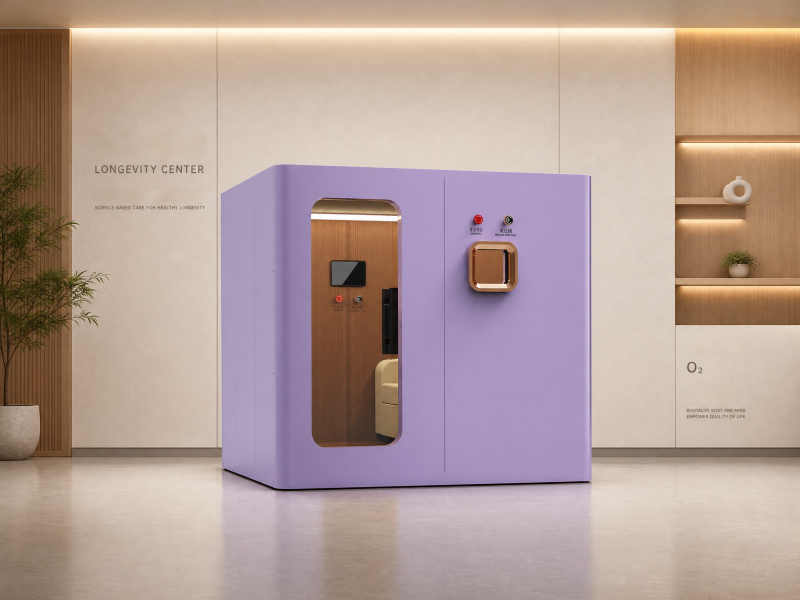
This article provides an overview of the key stages involved in the OxyMega oxygen chamber manufacturing process.
1. Product Design and Engineering
Every oxygen chamber begins with product design.
Before production starts, the product structure, dimensions, configuration, appearance, and intended application need to be considered.
Different customers may have different requirements.
For example, a wellness center may need a visually integrated commercial configuration, while a luxury hospitality project may place greater emphasis on exterior design and interior experience.
An OEM customer may also require customized branding, dimensions, colors, configurations, or other product details.
During the design stage, the manufacturer needs to consider factors such as:
- Chamber structure
- Overall dimensions
- Internal space
- Door configuration
- Sealing system
- Control system
- Electrical components
- Interior configuration
- Lighting
- Pressure specifications
- Maintenance access
The objective is to create a product configuration that is technically appropriate for its intended application.
2. Material and Component Selection
Materials and components play an important role in oxygen chamber manufacturing.
Depending on the product configuration, different components may be involved in the chamber structure, sealing system, control system, electrical system, and interior environment.
Material selection should take into account factors such as:
- Structural requirements
- Product dimensions
- Pressure specifications
- Durability
- User experience
- Maintenance requirements
- Overall product design
For customized projects, material and component selection may also need to be evaluated in relation to the customer’s specific requirements.
A professional manufacturing process should therefore consider the entire product system rather than treating each component independently.
3. Component Preparation
After the product design and specifications are confirmed, the required components are prepared for assembly.
Depending on the model, this may include:
- Structural components
- Door components
- Sealing components
- Control-system components
- Electrical components
- Interior components
- Lighting components
- Hardware and fittings
Before assembly, components need to be checked according to the manufacturer’s production and quality-control procedures.
Proper preparation helps reduce errors during the assembly process and supports consistency between production units.
4. Chamber Assembly
Assembly is one of the key stages in oxygen chamber manufacturing.
The individual components are gradually integrated into the complete chamber according to the product design and production requirements.
During assembly, attention may be given to:
- Structural connections
- Door installation
- Sealing components
- Electrical connections
- Control systems
- Interior components
- Lighting
- Hardware installation
For commercial oxygen chambers, assembly also needs to take into account the final user environment.
The finished equipment should not only meet the specified product configuration but also provide a practical and comfortable user experience.
5. Control System Installation
Modern oxygen chambers may include electronic control interfaces that allow users or operators to manage different equipment functions.
Depending on the model, the control interface may provide access to functions such as:
- Pressure control
- Operating information
- Lighting
- Equipment settings
- System status
A well-designed control interface can make daily operation more straightforward and provide a more modern user experience.
For OEM projects, the control interface may also need to be considered as part of the overall product design and branding requirements.
6. Sealing and Pressure-Related Inspection
Sealing is an important consideration in oxygen chamber manufacturing.
A chamber needs to maintain its intended pressure conditions during operation, making the sealing system an important part of the overall product design.
During manufacturing, relevant areas may be inspected for:
- Door sealing
- Connection points
- Sealing components
- Potential leakage points
- Pressure retention
The exact inspection procedures may vary depending on the chamber model and configuration.
This is one reason why buyers should ask manufacturers not only about the chamber’s pressure specification, but also about how pressure-related quality control is performed.
7. Pressure Testing
Pressure testing is an important stage of the OxyMega production process.
Once the chamber has been assembled, testing can be performed to evaluate the chamber’s pressure-related performance and identify potential issues before the product moves to the next stage.
Pressure testing may help evaluate areas such as:
- Pressure retention
- Sealing performance
- System operation
- Potential leakage
- Overall chamber condition
At OxyMega, our engineering team assembles the products and performs pressure testing before the equipment proceeds to the next stage of production.
Testing procedures are based on the specific product model and its technical requirements.
8. Quality Inspection
Quality control does not stop after pressure testing.
A completed oxygen chamber may also undergo a final inspection covering relevant product areas.
Depending on the model, inspection may include:
- Exterior condition
- Structural components
- Door operation
- Sealing components
- Electrical systems
- Control interface
- Lighting
- Interior configuration
- Product specifications
The purpose of final inspection is to confirm that the finished product corresponds with the agreed configuration before it moves toward packaging and delivery.
9. OEM and Customization Verification
For OEM and ODM projects, additional verification may be required.
Customized projects can involve specific requirements related to:
- Brand identity
- Logo placement
- Exterior design
- Interior design
- Product dimensions
- Product configuration
- Packaging
- Documentation
Before mass production or final delivery, customized requirements should be reviewed and confirmed between the manufacturer and customer.
Clear communication at this stage can help reduce misunderstandings and ensure that the delivered product matches the agreed project specifications.
10. Final Preparation and Packaging
After production and inspection are completed, the oxygen chamber is prepared for shipment.
Large commercial equipment requires careful packaging because the product may travel long distances before reaching its final destination.
Packaging considerations can include:
- Product protection
- Component protection
- External packaging
- Transportation requirements
- Loading and unloading
- Shipping destination
For international B2B projects, packaging is particularly important because equipment may experience multiple transportation stages before reaching the customer.
11. Preparing for Global Delivery
An oxygen chamber manufactured for an international customer may need to travel across borders and through different logistics channels.
Before shipment, the manufacturer and buyer may need to confirm:
- Final product configuration
- Shipping destination
- Packaging
- Shipping documentation
- Delivery arrangements
- Product documentation
- Installation requirements
Clear communication between the manufacturer, customer, and logistics partners can help support a smoother delivery process.
12. Why Manufacturing Capability Matters for OEM Projects
OEM projects require more than simply adding a customer’s logo to an existing product.
Depending on the project, OEM cooperation may involve:
- Product selection
- Design discussion
- Configuration changes
- Branding
- Custom components
- Product testing
- Packaging
- Documentation
- Production coordination
This means the manufacturer’s technical and production capabilities can directly affect the development of an OEM project.
For international brands entering the oxygen wellness equipment market, working with a manufacturer that can communicate clearly throughout the process can make the development process more efficient.
13. Building a Long-Term Manufacturing Partnership
For many B2B buyers, the first order is only the beginning of the relationship.
As a business grows, customers may require:
- Additional units
- New product configurations
- Different chamber sizes
- New branding
- New applications
- Product upgrades
- Replacement components
- Ongoing technical support
A manufacturing partner should therefore be evaluated not only by the product delivered today, but also by its ability to support future projects.
A stable manufacturing relationship can help businesses develop their oxygen wellness equipment offering over time.
The OxyMega Approach to Oxygen Chamber Manufacturing
At OxyMega, we combine product design, manufacturing, assembly, testing, and quality control to support oxygen chamber projects for international customers.
Our product portfolio includes different chamber configurations designed for a range of commercial and private wellness environments.
We also support OEM and ODM projects where customers require customized product configurations, branding, or design requirements.
Our manufacturing approach focuses on several key areas:
Product Design
Understanding the application and product requirements before production.
Manufacturing
Following defined production and assembly processes for different chamber configurations.
Pressure Testing
Performing pressure-related testing during the manufacturing process based on the specific product requirements.
Quality Control
Inspecting relevant product components and the finished equipment before delivery.
OEM Support
Working with customers to develop customized oxygen chamber solutions for different markets and applications.
From Manufacturing to Global Markets
An oxygen chamber is the result of many individual manufacturing stages working together.
From product design and material selection to assembly, pressure testing, final inspection, and packaging, each stage contributes to the finished product.
For international buyers, understanding this process can provide a clearer picture of what to look for when evaluating an oxygen chamber manufacturer.
At OxyMega, our goal is to support customers not only with oxygen chamber products, but also with manufacturing and OEM capabilities for different international markets.
Whether you are a distributor, wellness business, hospitality group, sports recovery facility, private brand, or project developer, our team can discuss your product requirements and explore suitable oxygen chamber configurations.
Frequently Asked Questions
Where are oxygen chambers manufactured?
Oxygen chambers are manufactured through a series of processes including product design, component preparation, assembly, testing, quality inspection, and final packaging.
What does an oxygen chamber manufacturer do?
An oxygen chamber manufacturer may be involved in product design, engineering, material and component selection, production, assembly, testing, quality control, customization, and after-sales support.
What is involved in oxygen chamber manufacturing?
The process can include design, material and component preparation, assembly, control-system installation, sealing inspection, pressure testing, quality inspection, customization verification, packaging, and delivery preparation.
Do oxygen chamber manufacturers offer OEM services?
Many manufacturers offer OEM or ODM services. The available customization options depend on the manufacturer’s technical capabilities and the specific product model.
Why is pressure testing important?
Pressure testing can help evaluate pressure-related performance and identify potential issues involving sealing, pressure retention, or system operation before the product is delivered.
Can an oxygen chamber be customized?
Depending on the manufacturer and product model, customization may include product dimensions, exterior design, branding, interior configuration, control interfaces, lighting, packaging, and other specifications.
Discuss Your Oxygen Chamber Project With OxyMega
Looking for an oxygen chamber manufacturer for your next commercial or OEM project?
Tell us about your application, target market, preferred configuration, design requirements, and customization needs.
The OxyMega team is ready to discuss your project and explore a suitable oxygen chamber manufacturing solution.
Disclaimer: Our mild hyperbaric oxygen chambers are wellness and relaxation devices. They are not medical devices and are not intended to diagnose, treat, cure, or prevent any disease or medical condition. The information provided is for educational and informational purposes only and does not constitute medical advice. Individual results may vary. Always consult your physician or qualified healthcare provider before beginning any new wellness program, especially if you have pre-existing health conditions.


