
Clinically proven mild hyperbaric oxygen chambers, with their diverse and validated health benefits, precisely meet the essential health needs driven by an aging population and upgrading consumption trends. They are transitioning from medical devices to a standard feature of home wellness. On the demand side, specific user segments provide support; on the supply side, technology and policies offer a solid foundation. With an expected annual growth rate of over 19% in the next five years, as prices continue to fall and application scenarios expand, the full potential of this hundred‑billion‑yuan market will be unleashed, establishing mild hyperbaric oxygen chambers as a core growth driver of the broader health industry.
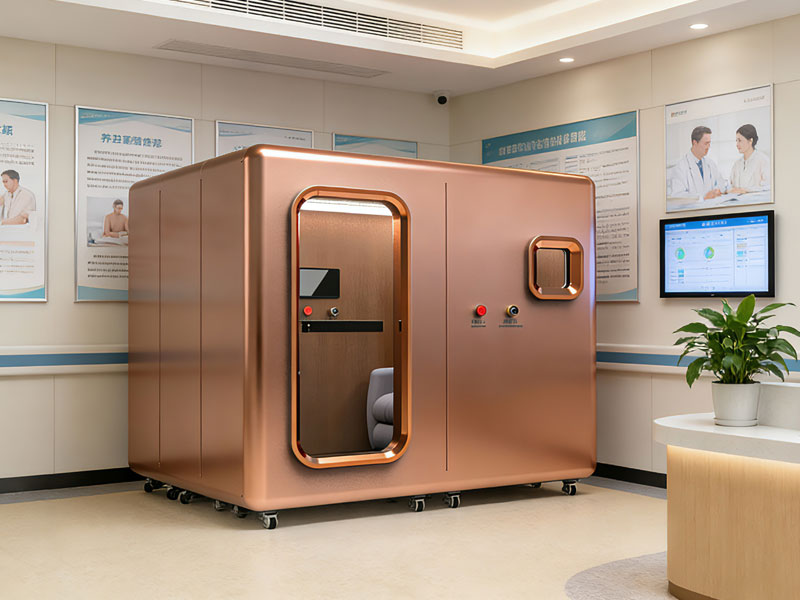
1. Core Benefits: Multi‑dimensional Health Empowerment, Scientifically Proven Physical and Mental Restoration
Civilian mild hyperbaric oxygen chambers (operating pressure 1.3‑1.5 ATA) increase plasma dissolved oxygen content (nearly six times that of normal atmospheric pressure), achieving health improvements from the cellular level to the whole body system. These benefits have been validated by multiple clinical studies:
- Chronic disease management and elderly health: For the 300 million elderly population, oxygen chambers significantly improve daily activity capacity. Studies show that after two weeks of continuous use, the score for eight activities of daily living (eating, dressing, etc.) increases by 20 points, dizziness and insomnia relief rates reach 90%, and the frequency of chronic disease episodes drops by 50%. For patients with hypertension and diabetes, the chamber improves vascular oxygenation, helps stabilize blood pressure and blood sugar, and achieves a diabetic foot ulcer healing rate of 75.24%.
- Anti‑aging and sub‑health management: It reduces aging cells by 37% and enhances immune cell vitality. For office workers with chronic fatigue syndrome, serum lactate clearance increases by 32.7%, and the sleep quality improvement rate reaches 78%. High‑net‑worth individuals use it as an anti‑aging necessity, and when combined with health management, it can delay skin aging and organ function decline.
- Sports recovery and injury repair: Professional athletes using the chamber show a 21% faster decline in muscle damage marker (CK) levels and a 40% shorter recovery time. The General Administration of Sport of China’s training bases have listed it as standard equipment. For general fitness enthusiasts, oxygen therapy accelerates lactate metabolism and reduces post‑exercise soreness.
- Special scenario adaptation: When used in plateau areas, blood oxygen saturation increases from 85% to 92%, with a 90% relief rate for hypoxia symptoms. For brain injury rehabilitation and sudden hearing loss, it can shorten the treatment cycle by 30% and reduce complication rates by 40%.
2. Demand Side: The Surge in Universal Health Demand Driven by Efficacy
Demand growth stems from the precise alignment of efficacy with population needs:
- Aging and chronic disease necessity: With over 300 million people aged 60+ in China and 500‑600 million chronic disease patients, the oxygen chamber’s chronic disease support and quality‑of‑life improvement functions make it a core choice for home health management.
- Consumption upgrades and proactive health: 55.8% of high‑net‑worth individuals are willing to pay a premium for anti‑aging and sub‑health management. White‑collar workers (38% prevalence of chronic fatigue) and postpartum women are driving an annual 15% increase in demand for home oxygen chambers.
- County and lower‑tier market expansion: The National Health Commission is promoting the allocation of oxygen chambers in county‑level hospitals. Xinjiang, Jiangxi and other provinces offer 30% purchase subsidies, and the share of demand from county markets has jumped from 32% to 42%.
3. Market Size: Rapid Growth, Accelerating Formation of a Hundred‑Billion‑Yuan Track
Both global and Chinese markets are experiencing explosive growth: In 2025, China’s mild hyperbaric oxygen chamber market exceeded 3.5 billion yuan (civilian share 35%), and is expected to surpass 8.5 billion yuan by 2030. Some forecasts predict a peak of 50 billion yuan, with a CAGR above 19%. Key growth drivers:
- Price reduction: Home models have dropped to 80,000‑180,000 yuan, a 40% decrease from five years ago, with the share of home users rising from 15% to 40%.
- Policy dividends: Regulatory standardization as Class II medical devices, plus a 13% VAT reduction, has driven an additional 2,000 units of county‑level procurement.
- Category differentiation: Single‑person soft chambers are growing fastest (CAGR 19%). Commercial scenarios contribute 35% of market share, with home scenarios becoming the main growth driver.
4. Application Scenarios: Full‑Scenario Implementation, Dual Drive from B‑Side and C‑Side
- Home scenarios: Lightweight (120 kg), low‑noise (≤60 dB) designs adapt to apartments and villas. One‑button operation plus remote monitoring supports independent use by the elderly, making the chamber a standard for chronic disease management and sleep improvement.
- Commercial scenarios: Large hospitals, rehabilitation centers, and gyms are adopting them in batches. One hospital equipped with a 6‑person commercial chamber saw a 50% increase in daily service volume. High‑end hotels and medical aesthetic clinics use them as value‑added services. The Shanghai Chongming cultural tourism project plans to deploy 1,000 units over three years to create a “wellness on the go” experience.
- Special and emerging scenarios: Used for hypoxia protection in plateau areas, integrated into chronic disease management systems in county hospitals. E‑sports hotels and community health stations are piloting rental models, lowering the consumption threshold and expanding user coverage.
5. Industry Landscape: Triple Empowerment of Policy, Technology, and Business Models, Clustering of Industrial Ecosystems
- Policy support: Guided by the “Healthy China 2030” plan, the implementation of the 2025 industry standard for household and similar mild pressure oxygen chambers has regulated market order.
- Industry and technology: Three major manufacturing clusters have formed in the Yangtze River Delta, Pearl River Delta, and Bohai Rim. Domestic manufacturing of core components exceeds 85%. Companies such as Liyang Space and Oumeikang have achieved breakthroughs in 1.9 ATA high‑pressure technology and AI intelligent pressure regulation, with failure rates as low as 0.3% (far below the industry average of 1.2%).
- Business model innovation: “Device + health monitoring” closed‑loop services are becoming widespread. Online e‑commerce and offline experience stores are accelerating market education. Franchising is booming, with over 20 physical stores nationwide. The dual‑scenario model of “community store + cultural tourism” is expanding industry boundaries.


